Let us help you grow the business you love.
Your world is about to get a whole lot simpler.



Economies of scale are fundamental to building a sustainable Community Management business. Technology, automation and standardised workflows allow Managing Agents to increase the number of communities and units they manage without increasing resources at the same rate. That is what makes a business scalable.
But there is another assumption about scale embedded in Community Management: that larger individual communities should also become more economical to manage.
The logic is intuitive. As a community grows, certain costs and processes can be spread across more units. Managing 300 units should therefore cost less, on a per-unit basis, than managing 30.
The industry's pricing certainly reflects that logic. But our emerging benchmark raises an important question:
Does the reality of community management scale as economically as the pricing assumes?
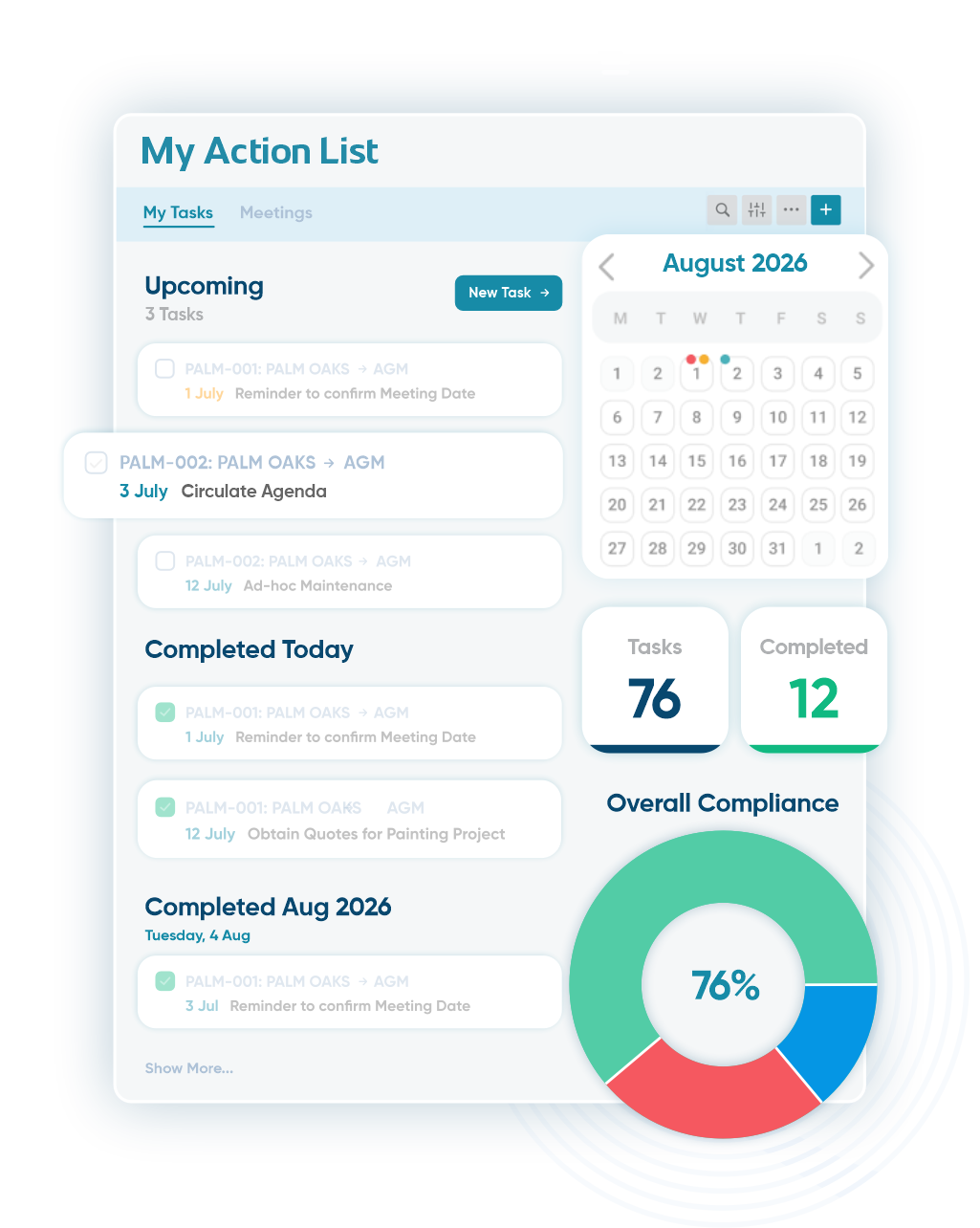
The South African Asset Intelligence Report we are currently developing is intended to give Community Asset Managers access to industry benchmarks across different community sizes and metropolitan regions. The emerging benchmark is already giving us new context for many of the financial, governance and operational measures they manage every day. And the patterns beginning to emerge are striking.
Across the benchmark, the average management fee falls from approximately R283 per unit for communities below 20 units to R88 per unit for communities above 251 units.
On the face of it, that looks exactly like economies of scale at work: as community size increases, the management fee per unit falls.
But management fees are only one part of the picture.
Look at the activity behind those fees and the pattern is far less straightforward. Our benchmark shows that debt management, payments, governance and resident rule management all scale with community size – but not in neat, predictable proportions.
In other words, the fee curve is clear. The effort curve is not.
The South African Asset Intelligence Report is being developed to turn aggregated, anonymised data from WeconnectU’s extensive client database into industry intelligence for property professionals. The Community Asset Management benchmark is designed to analyse financial, governance and operational patterns across different community sizes and metropolitan regions, giving Community Asset Managers new context for understanding and comparing the communities they manage.
Consider what happens when a community grows from 30 households to 300.
Some management activities appear to barely grow at all. The community still needs one accounting framework, one annual budget and audit cycle, one set of community-level financial statements, one AGM and set of AGM minutes, and a relatively fixed number of bank accounts, compliance schedules and reporting cycles to manage. Spread across 300 units rather than 30, the economics of these activities improve considerably.
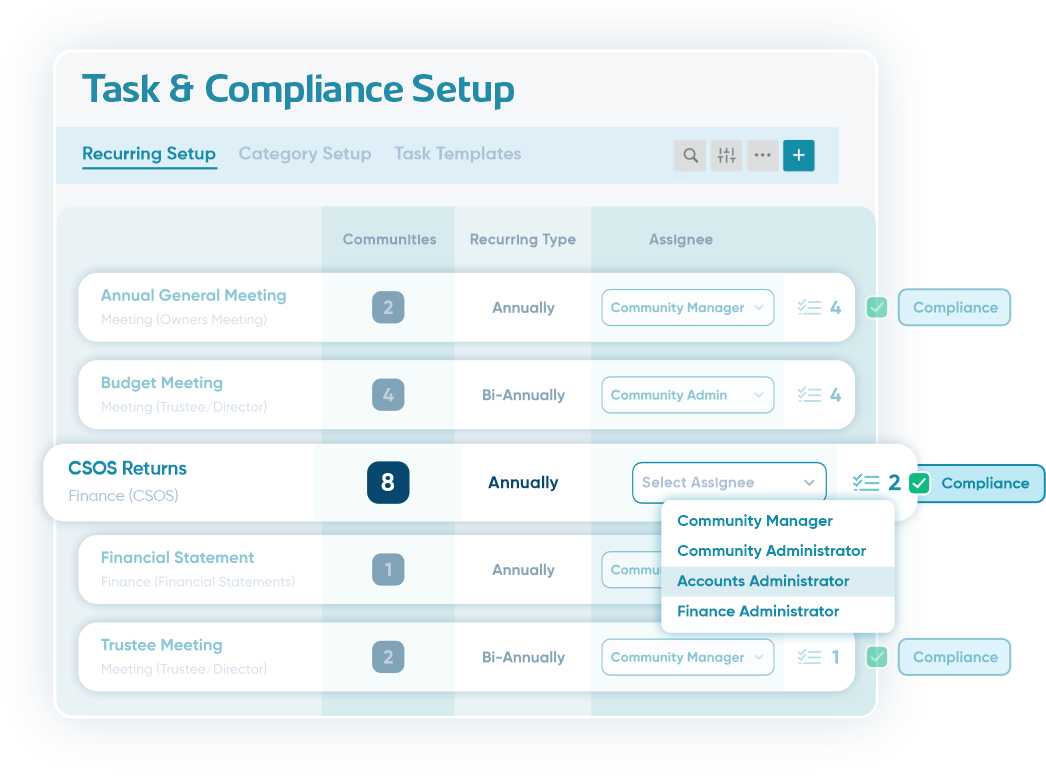
Technology creates further efficiencies. Transactions can be processed in bulk. Recurring workflows can be automated. Communications can be distributed at scale. Compliance processes can be standardised.
This is economies of scale doing exactly what we expect it to do.
But other aspects of managing that 300-unit community are directly influenced by the size of the community itself.
There are ten times as many households participating in the shared environment. More accounts can require debt-management action. More payments and approvals move through the community. More people create more potential interactions around rules, shared spaces, complaints and disputes. Greater use of common areas and amenities can also bring different maintenance demands, while larger communities may have more extensive shared infrastructure to manage.
So, while some management activities remain relatively fixed and others can be made significantly more efficient, a third category grows or changes with the community itself.
But the question isn’t whether larger communities create efficiencies. Clearly, they can. It’s whether those efficiencies extend far enough across the management mandate to justify the degree to which the management fee per unit declines.
As we develop our Asset Intelligence Report, we are beginning to build the context needed to unpack that question more meaningfully.
Instead of looking at management fees and unit counts in isolation, we can begin to consider them alongside the financial, governance and operational patterns associated with communities of different sizes. The result isn't a formula for what a Managing Agent should charge, but a far better understanding of what sits behind the fee.
Managing Agents already know what is happening within their own communities. They see the debt, payment activity, approvals, offences and governance activity every day.
What they haven't historically been able to see is how that picture compares.
Is this level of activity typical for a community of this size? How does its management profile compare with similar communities? Where are the differences significant enough to warrant a closer look?
For a Managing Agent assessing a new mandate, those comparisons can provide a more informed view of what they are taking on. For a business owner, they can add another dimension to conversations about capacity and remuneration. And for trustees and directors, they can provide greater context for understanding what effective management of their particular community requires.
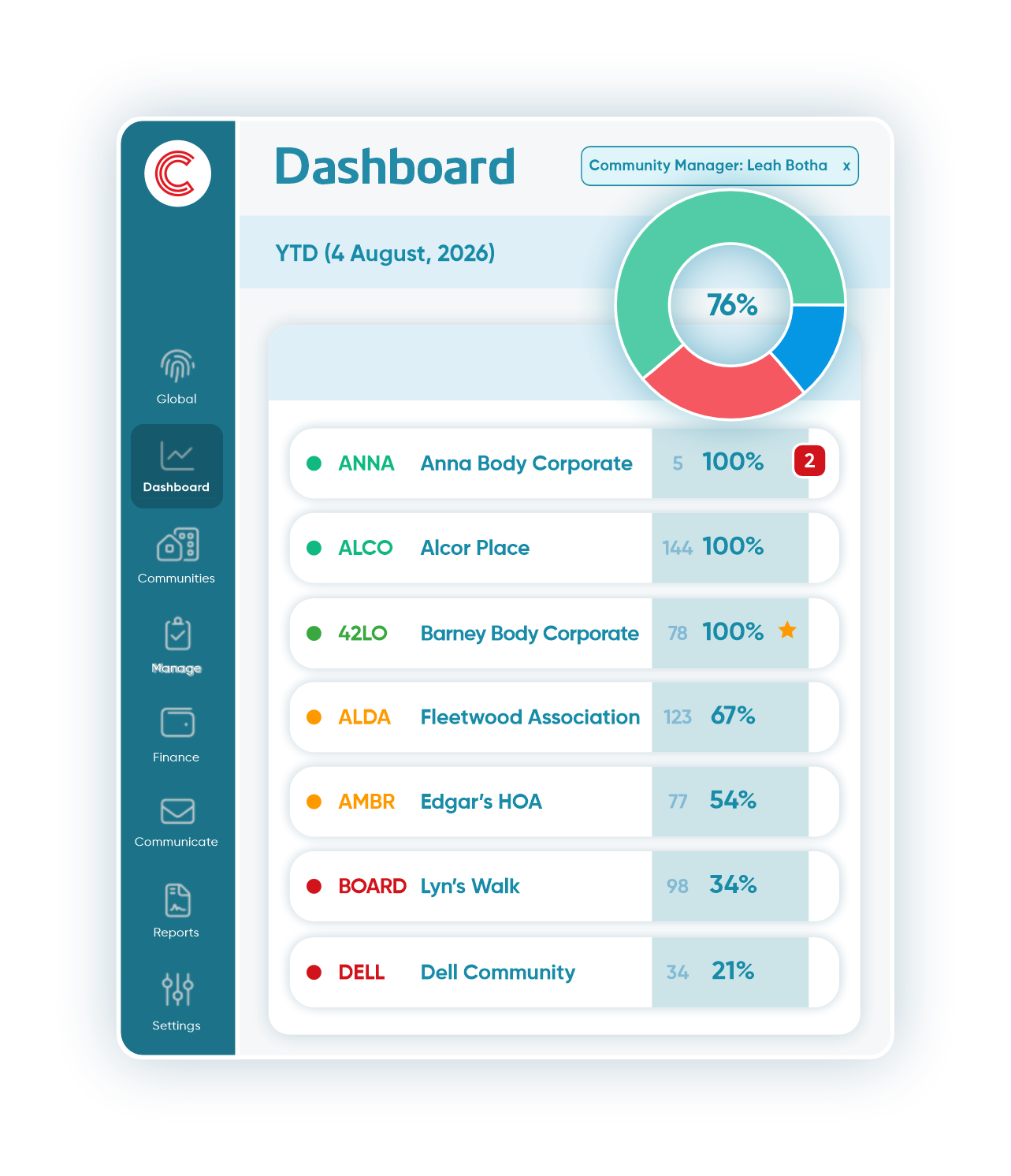
This is where benchmarking becomes professionally valuable. It gives experienced Community Asset Managers a stronger evidence base from which to apply their judgement.
The goal – in this case – isn't to replace unit count, or to abandon the economies of scale that make Community Management businesses more sustainable. It’s to understand scale with greater context.
Our South African Asset Intelligence Report is being developed to provide that context by turning the accumulated activity of communities across South Africa into intelligence that can help the profession recognise patterns that were previously difficult – if not impossible – to see.
And the management-fee pattern is just one example.
As this broader industry intelligence develops, Community Asset Managers will be able to investigate familiar questions from a new perspective – comparing their experience with similar communities to understand where effort is being generated, identify areas of potential risk, and put community performance into meaningful context.
There is still work to be done as we refine the benchmark and bring the broader industry context together. As this initiative develops, we look forward to sharing more about how Asset Intelligence can help Community Asset Managers make stronger, evidence-based decisions and ultimately become more valuable in the service they deliver and more valued for the outcomes they create.